Projects
HaMoshava-Kiryat Shmona
Location // Shprintzak, Kiryat Shmona, Israel.
Client // Metzudot Company
Year // 2025 Surface//
46,700 sq.m Program// Mixed-use – Residential, Employment, Public Facilities, and Commercial
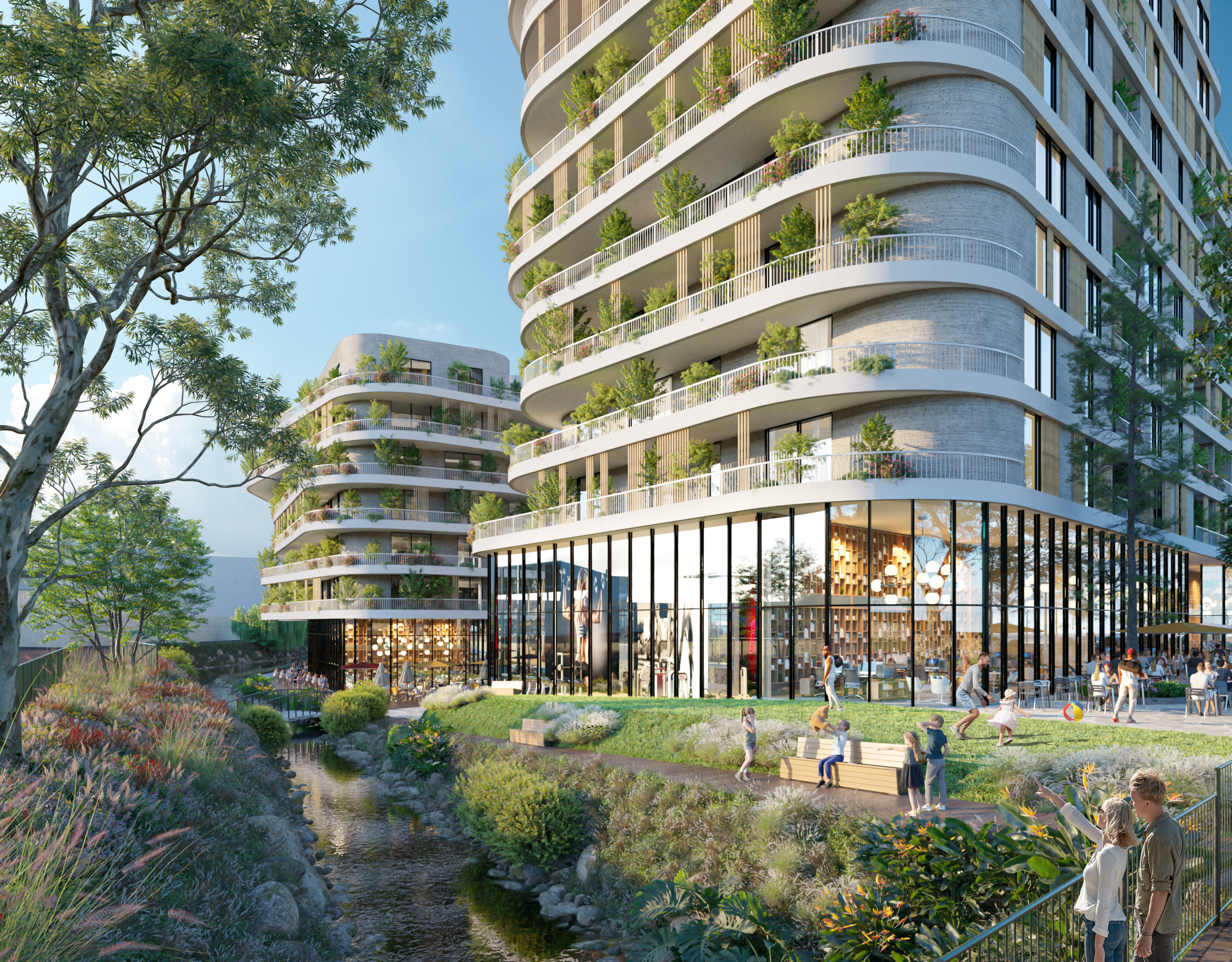
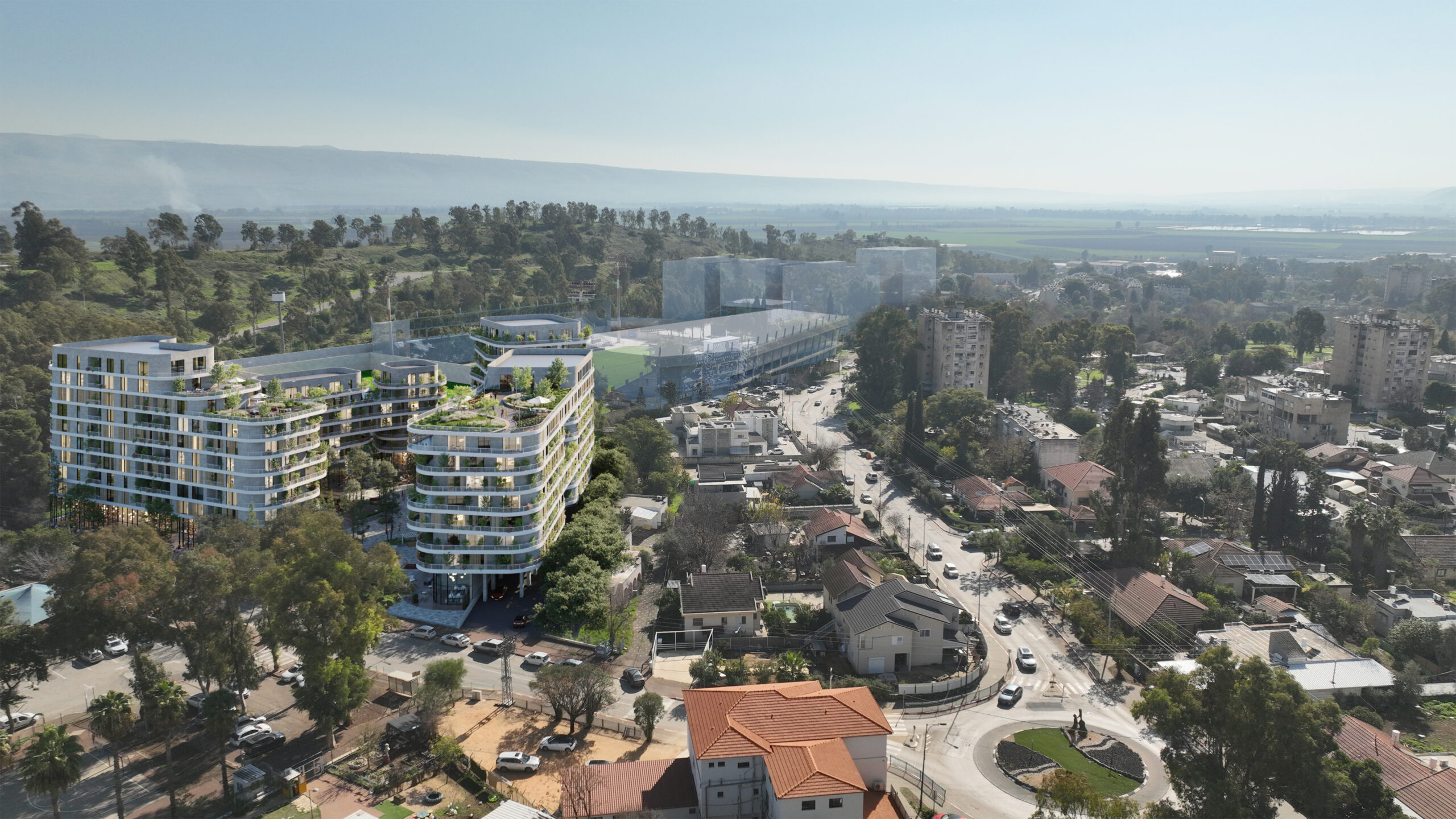
 An urban regeneration master plan for a site located along Shprintzak Street, adjacent to HaZahav Park and the Ein Zahav Stream. The project’s unique location presents an opportunity to create a nature-inspired urban architectural expression, conceived as a neighborhood growing out of the forest, with careful preservation of the existing trees on site.
The project establishes a new urban focal point at the heart of the historic neighborhood, connecting key urban anchors throughout the city and enhancing the presence of the Ein Zahav Stream within the urban fabric, contributing to its rehabilitation and strengthening its connection to the city center.
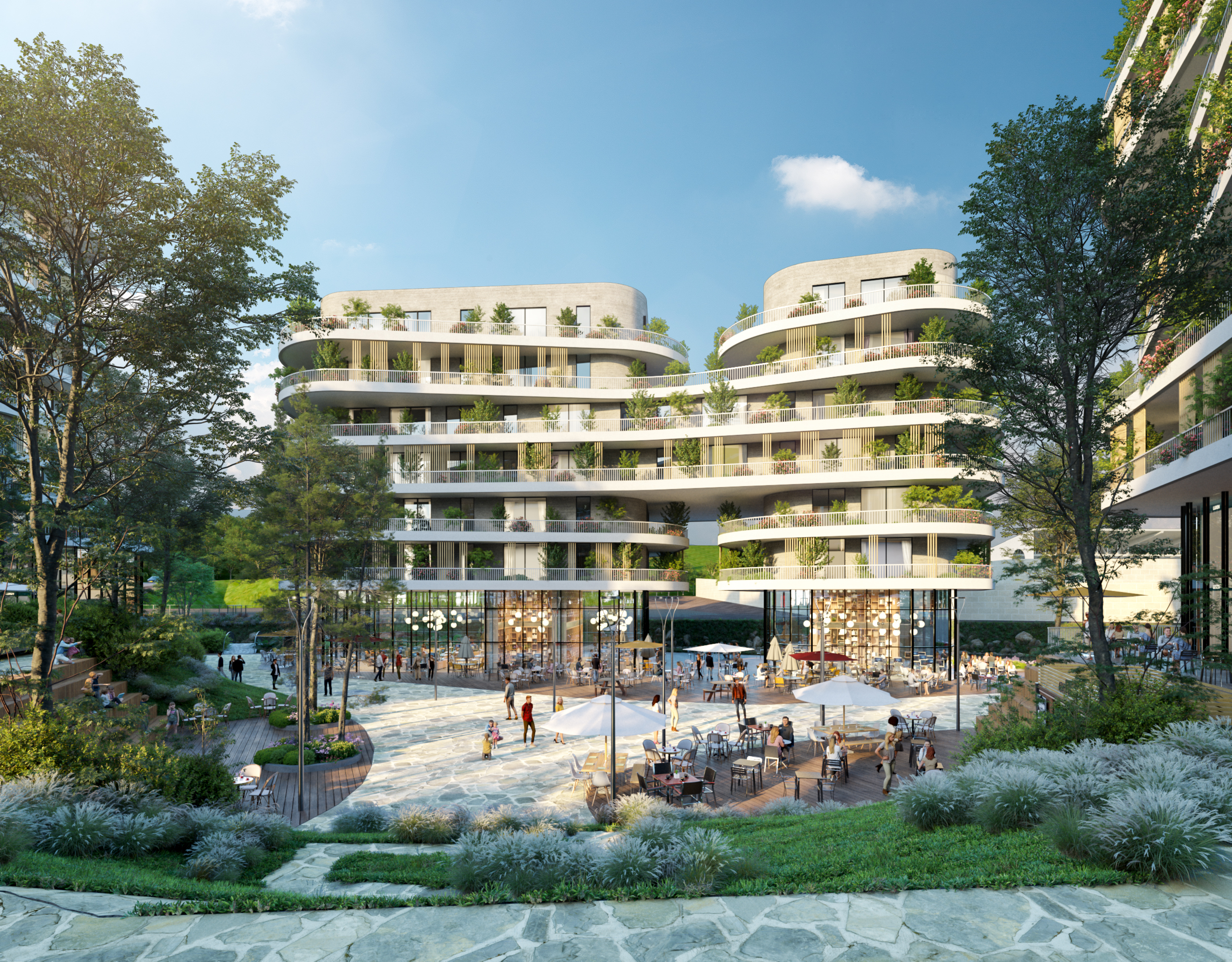
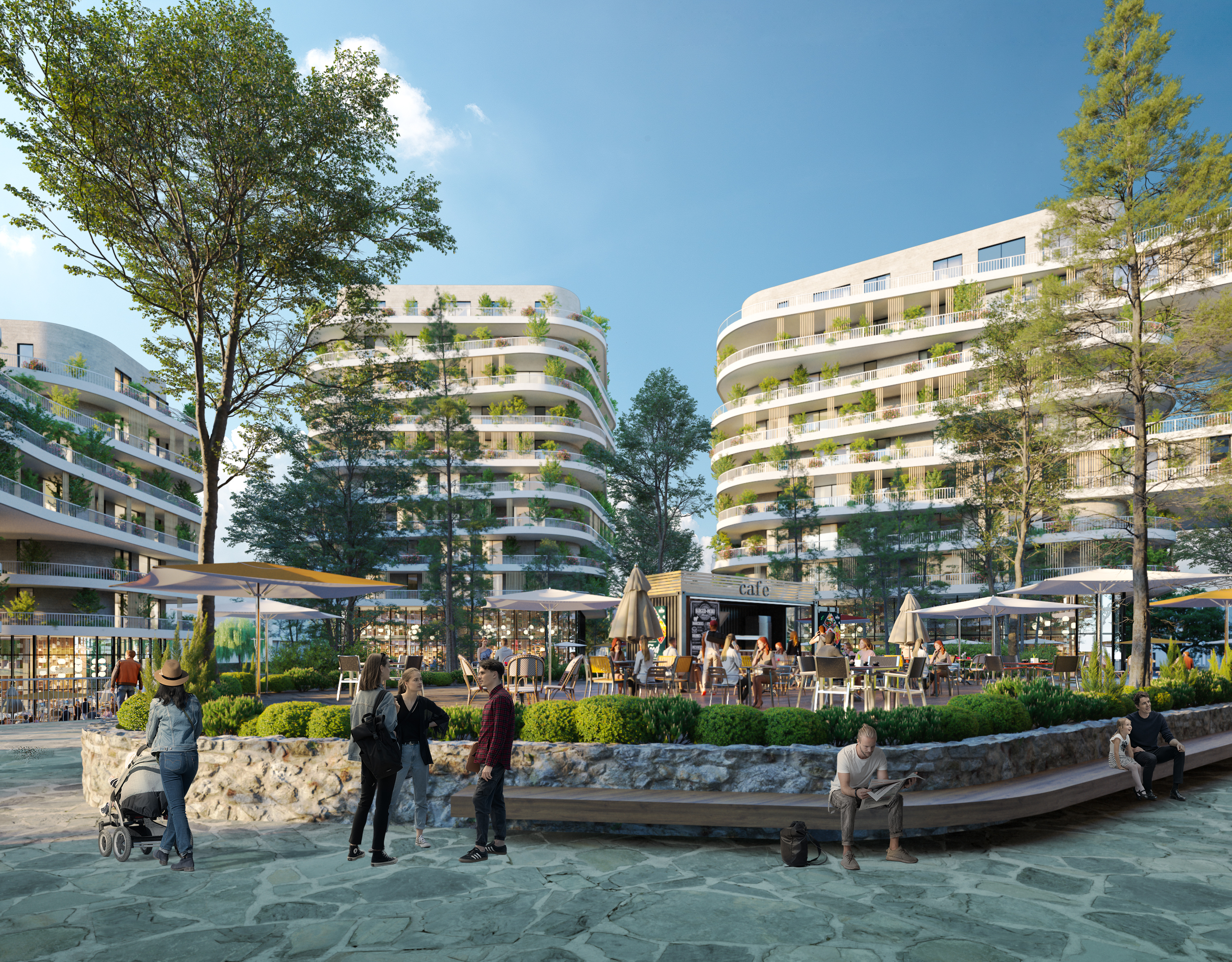
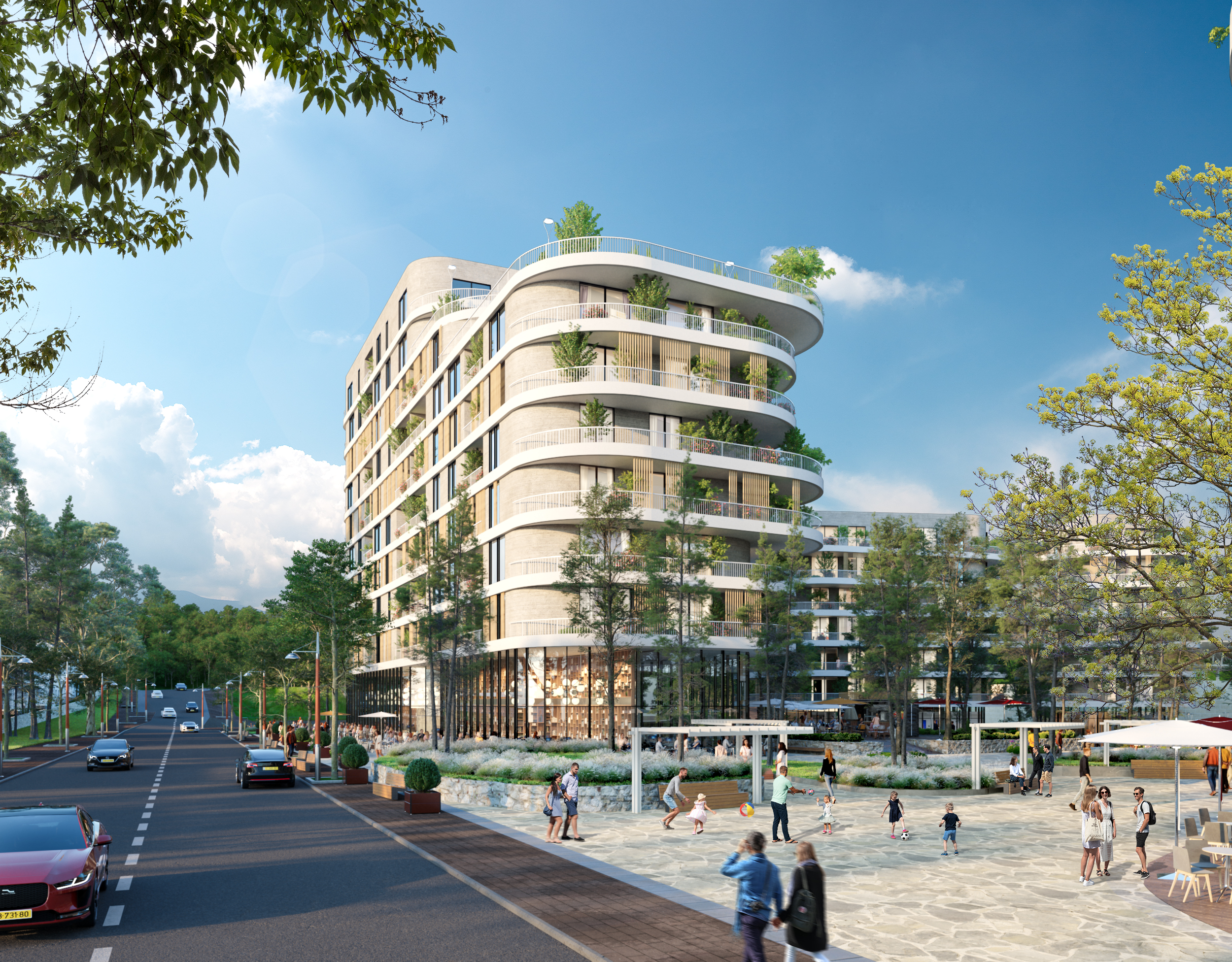
The plan proposes four residential buildings rising above an active podium that includes commercial uses, employment spaces, a public building, and community-oriented facilities. At the heart of the development, a generous open space is planned for use by both residents and visitors, creating a continuous spatial link between the Ein Zahav Stream, the park, and the city center.
Designed as a mixed-use development, the project enables the renewal of the city’s aging urban fabric while addressing local housing needs, with an emphasis on providing high-quality housing solutions for an aging population alongside attracting younger residents.
The project is designed for Metzudot Company, which has defined the concept of a “Living Neighborhood” across its developments. This planning approach integrates the advantages of rural living with those of an urban environment—safe and open spaces, reduced dependence on private vehicles, sustainable and green construction, a wide range of services accessible directly beneath residents’ homes, and the creation of vibrant, meaningful community and leisure life.
An urban regeneration master plan for a site located along Shprintzak Street, adjacent to HaZahav Park and the Ein Zahav Stream. The project’s unique location presents an opportunity to create a nature-inspired urban architectural expression, conceived as a neighborhood growing out of the forest, with careful preservation of the existing trees on site.
The project establishes a new urban focal point at the heart of the historic neighborhood, connecting key urban anchors throughout the city and enhancing the presence of the Ein Zahav Stream within the urban fabric, contributing to its rehabilitation and strengthening its connection to the city center.
The plan proposes four residential buildings rising above an active podium that includes commercial uses, employment spaces, a public building, and community-oriented facilities. At the heart of the development, a generous open space is planned for use by both residents and visitors, creating a continuous spatial link between the Ein Zahav Stream, the park, and the city center.
Designed as a mixed-use development, the project enables the renewal of the city’s aging urban fabric while addressing local housing needs, with an emphasis on providing high-quality housing solutions for an aging population alongside attracting younger residents.
The project is designed for Metzudot Company, which has defined the concept of a “Living Neighborhood” across its developments. This planning approach integrates the advantages of rural living with those of an urban environment—safe and open spaces, reduced dependence on private vehicles, sustainable and green construction, a wide range of services accessible directly beneath residents’ homes, and the creation of vibrant, meaningful community and leisure life.
15
25
35
45